Roofing service in Rocky Hill, CT
What roofing work on Rocky Hill homes usually involves, and how to arrange it.
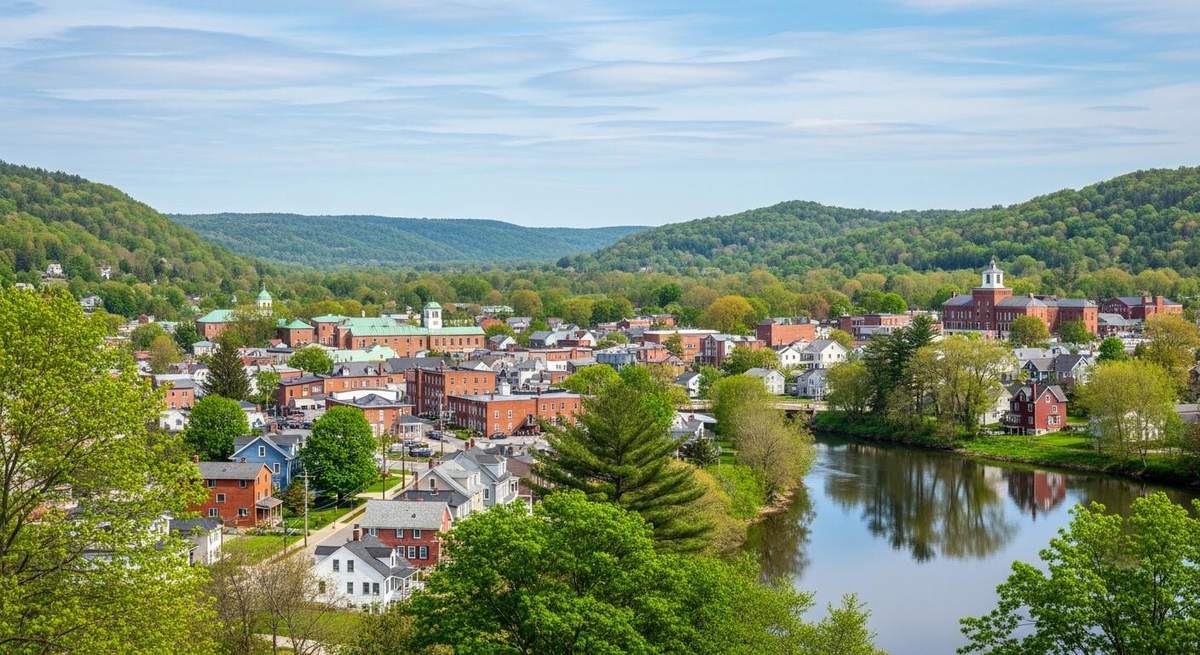
Covering Rocky Hill
Roofing work in Rocky Hill, CT
Rocky Hill is a short drive from Hartford, and the crews, the materials, and the fixed-price quote are the same ones Hartford gets. Storm damage and active leaks take priority over scheduled work; replacements and inspections get booked around what's already on the schedule.
What the roofs are like in Rocky Hill
Rocky Hill has about 20,724 residents and a median household income near $100,061, with roughly 68 percent of homes owner-occupied and a median home built around 1978 — a median is the midpoint of a distribution, not a description of every house in town — it means half the housing stock is newer than 1978 and half is older, sometimes considerably older, including homes that predate Hartford's own median of 1953 by a wide margin. That range matters more for roofing than the single midpoint number does.
Neither half of that range is unusual for a town this size. What matters is recognizing which one applies to a specific house before assuming a service or a timeline based on the town-wide number alone. That's true of most towns this size, not just this one, but it's easy to lose sight of when a single median number is the only figure anyone quotes.The older half of the range
A town built out mostly in the postwar decades and beyond still generally carries some housing that came before that wave — an older farmhouse, a home from an original town center, a handful of structures that predate the surrounding suburban development by decades. Those houses do not show up in a median statistic except as one of the data points pulling it slightly lower, but they are real roofs with real, materially different histories than their newer neighbors.
Some of that older stock may still carry, or have once carried, slate — a material common on higher-end and older construction well before asphalt shingles became the standard choice. A historic slate restoration is a different scope of work entirely from anything the rest of this page discusses: matching existing slate where possible, replacing failed pieces without disturbing sound ones nearby, and addressing flashing details specific to a slate system rather than an asphalt one. It is a niche need in a town where most of the housing stock is considerably newer, but it is a real one, and treating every roof in town as a variation on the same 1970s-and-later profile misses the older properties that don't fit that pattern at all.
The practical lesson is simple: a house's actual age, not the town's median, is what determines which approach applies. Two houses a few blocks apart in Rocky Hill can call for genuinely different services, and neither the newer one nor the older one is the exception — they're both just part of the same range that produced a median of 1978 in the first place.
Identifying which category a given roof falls into is usually straightforward once someone is actually looking at it. Slate has a distinct visual signature — individual overlapping stone tiles rather than a continuous asphalt surface — and the framing underneath an original slate roof was typically built to carry its substantially greater weight from the start, which is itself a clue about the house's real age even if the covering has since been replaced with something lighter. A house that was originally framed for slate, even if it's currently covered in asphalt, has a different structural story than a house built decades later and framed for asphalt from day one.
Restoration, in this context, means something specific and different from replacement. Slate itself, when sound, can last far longer than an asphalt covering, so the goal on a genuinely historic slate roof usually isn't a full tear-off but a targeted correction — replacing cracked or slipped pieces, matching material as closely as possible, and rebuilding flashing details that were never designed around modern underlayment products. Treating a slate roof like an oversized asphalt job, or worse, replacing it outright with asphalt because that's the more familiar material, throws away decades of remaining service life that a more careful approach would have preserved.
None of this means every older-looking roof in town is slate, or that every homeowner with an older house needs to worry about a historic material. Plenty of older homes in a town this size were reroofed in asphalt decades ago and have stayed that way since, with no remaining slate to restore. The point is simply that age variation is real here, and the right first step on any older property is confirming what's actually up there rather than assuming either a historic material or a standard one based on the house's general era.
That confirmation step is the entire difference between an accurate scope of work and an assumption that turns out wrong once the crew is already on site.
The typical case: a straightforward replacement
For the larger share of Rocky Hill's housing actually built around the 1978 median, the situation is more ordinary. A roof original to a house from the late 1970s, or one covering installed sometime after, has had decades to work through a normal asphalt shingle service life, and a growing share of that housing stock is now reaching the point where a roof replacement is the expected next step rather than a surprise.
That's a different conversation than the one an older, multiply-recovered roof requires. A house from this era is more likely to be on its first or second covering rather than its third, which means less accumulated patch history to sort through and a more straightforward assessment of what's actually needed: is the current covering past its service life, and if so, what does a clean, direct replacement look like on a roof with reasonably well-documented history compared to something built decades earlier.
At Rocky Hill's income level, roughly 68 percent of that decision sits with an owner planning to stay, which tends to favor addressing a roof nearing the end of its service life proactively — scheduling replacement before a failure forces the issue — over waiting for an active leak to set the timeline. The remaining rental share follows a different calculus, weighing replacement against a property's ongoing return the way it would in any town with a meaningful non-owner-occupied share.
Owner-occupants in this situation also benefit from more predictable planning than a homeowner working with an older, multiply-patched roof. A house on its first or second covering, without decades of piecemeal repair history to untangle, gives a more direct answer to the basic question of remaining service life — there's simply less accumulated uncertainty to sort through before landing on a straightforward yes-or-no about whether replacement makes sense now or can reasonably wait another few years.
Material choice on a straightforward replacement is also a more open question than it would be on an older, structurally constrained roof. Without an original slate load or decades of stacked coverings to work around, a house in this category has more flexibility to consider upgraded materials, better ventilation design, or improved ice-and-water protection at the eaves as part of the replacement, rather than being limited by what the existing structure can accommodate. That flexibility is one of the genuine advantages of working on newer housing stock, even though it rarely gets mentioned alongside the more obvious point that a newer roof simply needs less immediate attention.
Timing that decision well matters financially too. Scheduling a replacement while the existing roof is still functional, rather than waiting for a failure, generally avoids the added cost and disruption of interior water damage that an unplanned failure can bring with it — a roof that fails on its own schedule rather than the homeowner's tends to fail at the least convenient moment, not the most.
None of that removes the value of a direct look before committing to a timeline either way.
Not every roof in town is a house
Like most towns in this part of Connecticut, Rocky Hill's building stock isn't exclusively residential. Office buildings, retail space, and light commercial properties sit within and alongside the residential neighborhoods, and those buildings usually carry flat or low-slope roofing systems that age and fail on an entirely different track than a pitched shingle roof does. Commercial roofing services cover that different track: membrane systems, drainage engineered for a flat surface rather than a pitched one, and a maintenance rhythm built around a business's own schedule and budget rather than a homeowner's.
The underlying math for a commercial property owner often resembles the rental-property math discussed for residential buildings, just at a different scale — a business weighing a roof expense is thinking about it as an operating cost, not a personal living space, which shapes the decision toward extending service life through maintenance and targeted repair rather than reflexively pursuing a full replacement the moment a problem shows up.
The throughline across all three of these situations — an older slate roof, a typical 1970s-and-newer replacement, and a commercial flat roof — is the same one: a median describes a town in aggregate, but every roof decision is made on one specific building, with its own age, its own history, and its own actual condition. None of those three situations is the default one and the others exceptions; they're simply what's actually on the ground in a town this size.
Recognizing a flat commercial roof for what it is, rather than treating it like an oversized version of a residential roof, matters from the first inspection onward. The failure modes are different — membrane seams, ponding water, drainage that depends on slight engineered slope rather than gravity across a steep pitch — and a maintenance plan built around residential assumptions misses most of what actually needs checking on a flat commercial system.
Budget cycles are part of that difference too. A homeowner typically approaches a roof expense as a one-time, occasional decision; a commercial property owner or manager is more likely to be working within an annual maintenance budget and a longer-term capital planning cycle, where a coating or partial repair extending the current membrane's life by several years can make more financial sense than a full replacement charged against a single year's budget. Neither approach is wrong — they simply reflect how differently a business and a household plan for the same category of expense.
What both approaches share is the same starting requirement: an honest read of the membrane's actual condition before deciding which path fits the building and the budget in front of us.
Hours
Mon–Sat 7am–6pm
Calls are answered Mon–Sat 7am–6pm. Arrival windows are agreed on the call, and storm damage gets priority.
Call (860) 421-6068What we handle
Roofing services we bring to Rocky Hill
-
Full new-roof installation on additions, new builds and full tear-offs.
See details → -
Complete removal and replacement of a worn or storm-damaged roof, from deck inspection through final cleanup.
See details → -
Section or full-roof shingle replacement matched to existing coursing so the repair doesn't stand out from the street.
See details → -
Replacing rotted or delaminated plywood decking discovered during a tear-off, before new shingles or underlayment go down.
See details → -
Reframing a low-slope or flat section to a working pitch so water sheds instead of pooling and leaking.
See details → -
Sistering rafters and reinforcing framing that has sagged under snow load or years of undersized original construction.
See details →
Where we go
Hartford and the surrounding towns
Hartford is the base; these are the neighboring communities our crews cover.
- West Hartford, CT
- East Hartford, CT
- Wethersfield, CT
- Newington, CT
- Bloomfield, CT
- Windsor, CT
- South Windsor, CT
- Rocky Hill, CT
- Manchester, CT
- New Britain, CT
- Glastonbury, CT
- Farmington, CT
- Avon, CT
- Simsbury, CT
- Berlin, CT
- Bristol, CT
Hiring in one of these towns?
A separate guide for each town on what to check before you sign with any roofing contractor there — license and insurance, written scope, and what the warranty actually covers.
Request a quote
Not an emergency? Send the details.
For anything urgent, calling is faster — the phone is answered Mon–Sat 7am–6pm. Use this for scheduled work: inspections, estimates, or a replacement you want priced.