Roofing contractor serving Plainville, CT
What to ask a roofing contractor in Plainville, CT, and what a written quote should itemize before any work starts.
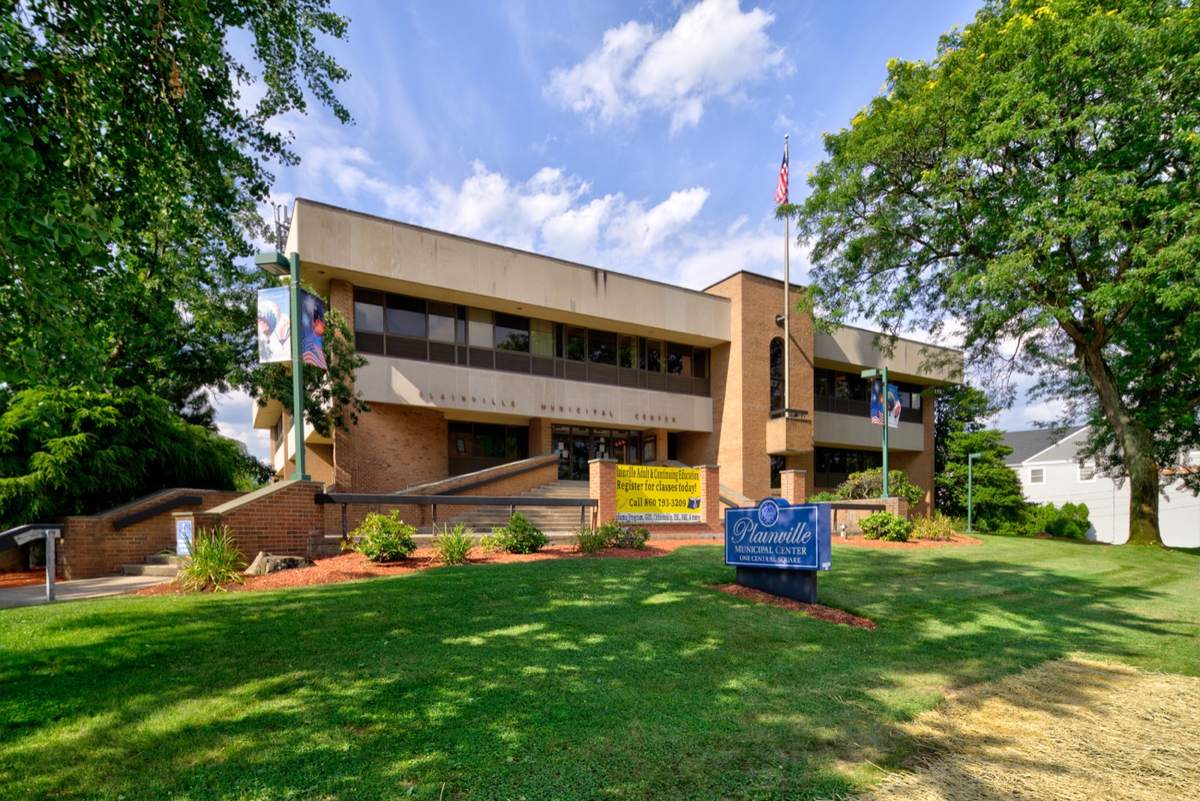
Hiring in Plainville
Choosing a roofing contractor in Plainville, CT
Whoever you hire in Plainville should carry current license and insurance, put the scope in writing before a ladder goes up, and back the work with a warranty that survives the crew driving away. We run repair, replacement and storm-response jobs in Plainville out of our Hartford base, quoted the same way for every town on the list.
Why two quotes for the same roof rarely match
Collect three quotes for a roof replacement in Plainville and it would not be unusual to see totals that differ by several thousand dollars for what looks, on paper, like the same job. The gap is almost never pure markup. It is almost always scope — one contractor pricing a full tear-off with a deck inspection allowance and a second pricing an overlay with none, or one including new flashing at every penetration while another assumes the old flashing is reusable without saying so.
The fix is not picking the middle number. It is asking each contractor to walk through their proposal line by line before any totals get compared, so a homeowner is judging three descriptions of the same job rather than three unrelated numbers that happen to be written on similar-looking paper.
It helps to bring the same list of questions to every estimate visit rather than letting each contractor set the terms of the conversation. Ask what happens if the deck turns out to need repair once the old shingles are off. Ask whether the price includes new flashing or reuses what is already there. Ask how disposal is handled and whether it is included in the number quoted. Three contractors answering the same three questions produce something genuinely comparable; three contractors each explaining their own number in their own way usually do not.
It is also fair to ask a contractor directly why their number differs from a competing bid, once you have both in hand. A contractor confident in their own scope should be able to explain the difference in plain terms — more ice-and-water coverage, a different underlayment, a full tear-off instead of an overlay — rather than falling back on a vague claim that their work is simply better.
Reading a roof replacement quote like a contract
A proposal for a full roof replacement should read less like an estimate and more like a document you could hand to a second contractor and ask, plainly, whether it describes a complete job. That means naming whether the work is a tear-off or an overlay, and if it is a tear-off, stating how deck repair gets priced — a per-sheet rate agreed in advance, not an open-ended allowance for extra costs discovered later.
It should name the underlayment product and how far the ice-and-water shield extends past the eaves, since coverage that stops short of code minimum is a common way a lower bid gets to its number. It should call out flashing by location rather than folding it into a general line, and it should say whether the existing attic ventilation is being balanced as part of the job or left exactly as it was found. Disposal, a nail sweep of the yard, who pulls the permit, a payment schedule tied to progress rather than paid in full up front, and warranty terms spelled out in writing all belong on the same page, not promised verbally and left off the paper.
Fastening pattern is a detail easy to skip past but worth asking about directly, since it is one of the few line items that can void a manufacturer's material warranty without the homeowner ever knowing it happened. Most shingle manufacturers specify a minimum number of fasteners per shingle and where on the shingle they need to land; a crew working quickly under time pressure can drift from that spec in a way that looks identical to correct work once the job is finished, and only shows up years later when a warranty claim gets denied over an installation detail nobody discussed at the estimate stage.
Older homes here carry their own line items
Plainville's median home was built around 1970 — with roughly 67 percent of housing owner-occupied, a town where the typical roof is not especially old for the area, but where plenty of individual homes are considerably older than that median suggests. A standard shingle quote written for the town's typical house does not automatically cover what an older home actually needs, and it is worth telling a contractor up front, before the estimate visit, roughly how old the house actually is rather than letting them guess from the street.
A masonry chimney on a home built well before 1970 often needs its own chimney flashing repair scoped separately from the main roof, since the flashing detail around an old chimney is frequently the first thing to fail and the last thing a general shingle quote thinks to itemize. Counter-flashing set into old mortar joints degrades on its own timeline, independent of how the shingles above it are holding up, which is exactly why it needs its own line rather than being assumed as part of a standard tear-off.
On the oldest homes still carrying an original slate roof, the right conversation is not a shingle tear-off quote at all — it is historic slate restoration, priced and executed as its own specialty with different materials, different labor, and a different failure mode than an asphalt shingle job entirely. Individual slates can often be replaced one at a time by someone who knows the material, which is a very different proposition from a full tear-off, and a contractor who quotes a slate roof exactly the way they would quote a standard shingle job, without distinguishing the two, is a sign to get a second opinion before signing anything.
Before comparing prices, verify the basics
License and insurance should be confirmed before a quote is taken seriously at all, not after a contract is signed. Ask for a current license number and a certificate of insurance naming the job address, and treat hesitation on either request as useful information rather than an oversight to smooth over.
A few patterns are worth watching for regardless of how good the price looks. Full payment demanded before material is delivered puts all the financial risk on the homeowner. Heavy pressure to sign during the same visit the estimate is written, before there has been time to compare it against anything else, serves the seller more than the buyer. A contractor with no fixed business address and no way to verify who they are beyond a phone number is harder to hold accountable if something goes wrong later in the job.
None of these checks take long, and a legitimate contractor will not treat them as an inconvenience. Someone operating on the level has that information ready before the estimate visit even starts, not scrambling to locate it after being asked.
Common questions before hiring in this town
Should a slate roof get the same three quotes as a shingle roof? Yes, but from contractors who specifically work in slate. A general roofing quote applied to a slate roof is often pricing the wrong scope of work entirely, since the materials, the flashing approach, and the labor time are not comparable to asphalt shingles.
Is it normal for quotes to disagree on whether the deck needs repair? It happens, and it is worth asking why. One contractor may be quoting from a ground-level look while another climbed up and opened a section to check. The one who actually inspected the deck is giving you more reliable information, even if their number is higher because of it.
What is a reasonable amount of time to compare quotes? Long enough to read each proposal in full and ask questions about anything that is unclear, rather than deciding under pressure during the estimate visit itself. A legitimate quote does not expire the moment the contractor walks back to the truck.
Does a workmanship warranty matter if the shingles already carry a manufacturer warranty? Yes — the two cover different failures. A manufacturer warranty typically covers a defective product; it does not cover a leak caused by how the product was installed. A separate written workmanship warranty from the contractor is what actually protects against an installation error.
What should be in writing before a deposit changes hands? The full itemized scope, the payment schedule, the warranty terms, and a start date range at minimum. A deposit paid against a verbal agreement, with the written contract to follow later, reverses the order that actually protects a homeowner and leaves very little recourse if the two sides later remember the conversation differently.
Hours
Mon–Sat 7am–6pm
Calls are answered Mon–Sat 7am–6pm. Arrival windows are agreed on the call, and storm damage gets priority.
Call (860) 421-6068What we handle
Roofing services we bring to Plainville
-
Full new-roof installation on additions, new builds and full tear-offs.
See details → -
Complete removal and replacement of a worn or storm-damaged roof, from deck inspection through final cleanup.
See details → -
Section or full-roof shingle replacement matched to existing coursing so the repair doesn't stand out from the street.
See details → -
Replacing rotted or delaminated plywood decking discovered during a tear-off, before new shingles or underlayment go down.
See details → -
Reframing a low-slope or flat section to a working pitch so water sheds instead of pooling and leaking.
See details → -
Sistering rafters and reinforcing framing that has sagged under snow load or years of undersized original construction.
See details →
Where we go
Hartford and the surrounding towns
Hartford is the base; these are the neighboring communities our crews cover.
- West Hartford, CT
- East Hartford, CT
- Wethersfield, CT
- Newington, CT
- Bloomfield, CT
- Windsor, CT
- South Windsor, CT
- Rocky Hill, CT
- Manchester, CT
- New Britain, CT
- Glastonbury, CT
- Farmington, CT
- Avon, CT
- Simsbury, CT
- Berlin, CT
- Bristol, CT
Hiring in one of these towns?
A separate guide for each town on what to check before you sign with any roofing contractor there — license and insurance, written scope, and what the warranty actually covers.
Request a quote
Not an emergency? Send the details.
For anything urgent, calling is faster — the phone is answered Mon–Sat 7am–6pm. Use this for scheduled work: inspections, estimates, or a replacement you want priced.