Roof wind damage repair: fixing what a lifting force does, not what an impact does
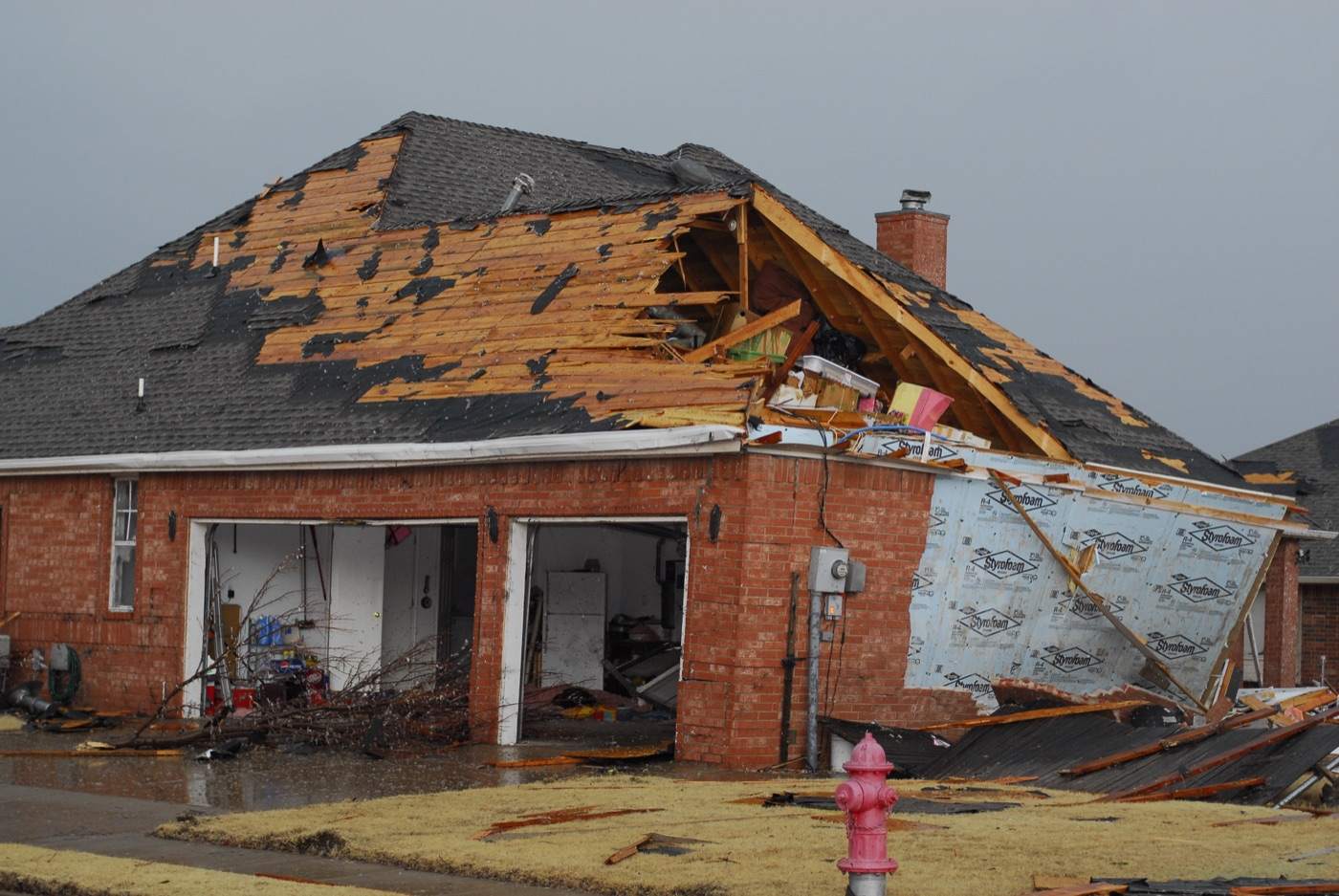
What the job involves
Roof Wind Damage Repair in Hartford, CT
How wind actually damages a roof
Wind doesn't hit a roof the way hail does. Instead of a downward impact, moving air flowing over the roof surface creates a pressure difference — lower pressure above the shingles, higher pressure underneath once air gets beneath an edge — and that difference is what pulls material upward and outward rather than pushing it down. It's the same basic principle that generates lift on an airplane wing, just working against a roof assembly that was never meant to fly.
That distinction matters for how the repair gets scoped. Hail damage is about impact points scattered across exposed surfaces; wind damage is about where the roof's edges and seams give the moving air something to grab onto. A shingle can survive years of direct rain and sun and still fail the first time wind finds its way underneath a loose corner, because the failure mode isn't wear in the usual sense — it's a mechanical detachment starting from one weak point and spreading from there.
Once wind gets under one tab or one section of ridge cap, the same lifting force works on the material next to it, which is why wind damage often shows up as a line or a cluster rather than a single isolated spot. A repair that only replaces the shingle that's visibly gone, without checking what's around it for the same partial detachment, tends to miss the section that's about to go next.
Wind direction matters too, in a way hail's random scatter never does. A gust that consistently comes from one direction during a given storm loads one side or one section of the roof far harder than the rest, so a roof can come through an event with damage concentrated almost entirely on the windward slope while the opposite side shows nothing at all. That's a useful clue when scoping a repair — it points toward checking the exposed side thoroughly rather than assuming damage is evenly spread across every plane the way it might be after a hailstorm.
Why edges and corners fail first
Roof edges, rakes, ridges, and corners take the worst of wind loading, because that's where moving air separates from the roof surface and the pressure difference driving uplift is strongest. The field of a roof — the broad, uninterrupted middle sections — generally holds up better under the same wind event than the perimeter does, which is why wind damage so often starts at the edge and works inward rather than the reverse.
The edge detail itself plays a direct role in how much damage that pressure translates into. A properly fitted roof drip edge gives the shingle's leading edge somewhere solid to bond to and keeps wind-driven rain from working in behind the fascia even where a shingle has lifted. A poorly fastened or missing drip edge leaves that same edge more exposed to the uplift force in the first place, and more likely to let water in even before the shingle itself tears loose.
Every shingle also relies on a factory-applied seal strip — a thin band of adhesive that bonds to the shingle course below it once warmed by the sun after installation. That bond is what resists uplift under normal wind; a strong gust that breaks it doesn't necessarily tear the shingle away outright. It can simply pop the seal loose and let the shingle settle back down looking intact, with the bond that used to hold it in place now broken. The next wind event has an easier time lifting that same shingle, because the one thing keeping it down is already gone.
Shingle age changes how that seal behaves under load, too. A newer roof's seal strips are typically at full strength, while an older roof's seal has already gone through years of thermal cycling — expanding and contracting through every hot day and cold night — that can leave the bond weaker than it was originally, even where nothing has visibly failed yet. That's part of why an older roof tends to show more wind damage from a given storm than a newer one nearby that caught the exact same gusts.
Damage you cannot see from the ground
A shingle with a broken seal strip that's settled back into place looks, from the driveway, exactly like every shingle around it. There's no missing piece, no visible gap, nothing that would prompt a second look on a drive-by inspection. The only real difference is that it's no longer bonded down, and the next strong gust — or sometimes just the next hard rain finding its way under a slightly raised edge — is what turns invisible wind damage into an active leak.
That's the core reason wind damage gets confirmed with a dedicated roof wind damage inspection rather than assumed from a walk around the yard after a windy night. Checking individual shingles for seal integrity, not just scanning for obviously missing material, is what finds the damage before it becomes a leak instead of after.
Ridge caps and hip lines get missed the same way, since they sit at the roof's highest, most wind-exposed points but aren't easy to see clearly from ground level on most homes. A ridge cap that's lifted slightly at one seam, without being fully torn off, sheds water fine on a dry day and fails the first time wind drives rain sideways into that same seam. None of this is damage a homeowner is expected to catch on their own — it's exactly what a proper inspection is built to find.
Flashing takes the same kind of hidden hit. A step-flashing piece at a chimney or wall transition can work loose from uplift without falling off entirely, sitting close enough to its original position that a glance from the ground reads it as intact. Metal that's shifted even slightly out of its lapped position stops shedding water the way it's supposed to, and the gap it leaves is often too small to see from anywhere but directly on the roof. That's one more reason a repair that starts from a real inspection, rather than a description of what's visibly wrong, tends to hold up through the next storm instead of just the one that prompted the call.
Roof vents and other penetrations sit right at the edge of this same problem. A ridge vent or a mushroom-style attic vent is fastened at a seam in the roofing material by design, which makes that seam another spot uplift can work at even when the vent itself never moves. A repair that resets the surrounding shingles but never rechecks the vent's own seal can leave that one detail as the weak point the next storm finds.
Hours
Mon–Sat 7am–6pm
Calls are answered Mon–Sat 7am–6pm. Arrival windows are agreed on the call, and storm damage gets priority.
Call (860) 421-6068Part of our emergency roof repair work — related: roof storm damage repair, roof hail damage repair.
Through the year
How Hartford weather changes this job
Winter in Hartford
Ice dams build along the eaves when attic heat melts snow that then refreezes at the colder edge, backing water up under the shingles. Sustained snow load also stresses older framing and flat sections built with a lighter deck.
Spring in Hartford
Freeze-thaw cycling through late winter works ice into small cracks in flashing and sealant, so the first heavy spring rain is usually when a slow leak turns visible. Wind during spring storms lifts shingles that ice already loosened.
Summer in Hartford
UV exposure and heat cycling dry out asphalt shingles faster on south- and west-facing slopes. A roof that looked fine in June can show granule loss and curling edges by August.
Autumn in Hartford
The season for getting ahead of winter — gutters cleared, flashing checked, and a full inspection scheduled before the first hard freeze locks in whatever damage went unnoticed over summer.
What we handle
Roofing services in Hartford
-
Full new-roof installation on additions, new builds and full tear-offs.
See details → -
Complete removal and replacement of a worn or storm-damaged roof, from deck inspection through final cleanup.
See details → -
Section or full-roof shingle replacement matched to existing coursing so the repair doesn't stand out from the street.
See details → -
Replacing rotted or delaminated plywood decking discovered during a tear-off, before new shingles or underlayment go down.
See details → -
Reframing a low-slope or flat section to a working pitch so water sheds instead of pooling and leaking.
See details → -
Sistering rafters and reinforcing framing that has sagged under snow load or years of undersized original construction.
See details → -
Repairing or reinforcing damaged trusses so the roof carries its rated load through the next big snowfall.
See details → -
Roof preparation that carries a solar array's weight and penetrations without voiding either the roofing or panel warranty.
See details → -
Residential roofing service covering material selection, installation and long-term care for every roof type Hartford homes use.
See details → -
Standard three-tab or architectural asphalt shingle installation, the most common re-roof for Hartford's postwar capes and colonials.
See details → -
Hand-split or taper-sawn cedar shake installation for owners restoring or preserving a period roofline.
See details → -
New natural slate installation on colonials and capes where the original roof has finally reached end of life.
See details → -
Repair and selective replacement for Hartford's original slate roofs, matched to the existing stone.
See details → -
Standing-seam or exposed-fastener metal roofing installation, sized for New England snow load and long-term durability.
See details → -
Concrete or clay tile roof installation for owners who want a distinct roofline and decades of service life.
See details → -
EPDM rubber membrane installation for flat and low-slope sections, welded and flashed to shed standing water.
See details → -
TPO single-ply membrane installation for flat commercial and residential additions, reflective and seam-welded for a tight roof.
See details → -
Reflective shingles, ridge ventilation and insulation upgrades chosen to cut attic heat loss through a Connecticut winter.
See details → -
Diagnosis and repair for leaks, flashing failures and storm-damaged sections before small problems become full replacements.
See details → -
Locating an active leak's true entry point, which is often feet away from the stain on the ceiling.
See details → -
Every failure point contributing to a leak identified through a full roof assessment before any repair is scoped.
See details → -
Flashing and sealant work at known failure points so this winter's freeze-thaw cycle doesn't reopen last year's leak.
See details → -
Sealing seams, penetrations and transitions with roofing-grade sealant to stop water intrusion at a specific point.
See details → -
Rebuilding step and counter flashing around a chimney, the single most common source of a roof leak.
See details → -
Chimney crown cracks patched and sealed before water gets behind the flashing and into the attic.
See details → -
Installing flashing at valleys, walls and penetrations, the metal detailing that keeps water moving off the roof.
See details → -
Drip edge fitted along eaves and rakes so runoff clears the fascia instead of rotting it from behind.
See details → -
Eave flashing rebuilt where ice dams do the most damage on older Hartford roof lines.
See details → -
Resealing or replacing failed skylight flashing and glazing seals that let water track down into a ceiling.
See details → -
Cutting in and flashing a new skylight, curb-mounted or deck-mounted, without compromising the surrounding roof deck.
See details → -
Removing and resetting solar panels to repair the roofing underneath, then re-flashing every mounting point.
See details → -
Storm, hail and wind damage — stabilizing the roof first, then scoping the permanent repair.
See details → -
Repairing roof damage from a specific storm event, documented and itemized for an insurance claim.
See details → -
Replacing hail-bruised or fractured shingles identified during a post-storm inspection, matched to the existing roof.
See details → -
Post-wind-event inspection finding lifted shingles and compromised seals before they turn into an active leak.
See details → -
Roof condition documented after a storm and written up for an insurance adjuster before repairs begin.
See details → -
Steam removal of active dams plus the ventilation and shield work that stops the next one.
See details → -
Raking or shoveling heavy snow load off a roof before it exceeds the structure's rated capacity.
See details → -
Scheduled inspection, ventilation and drainage work that catches freeze-thaw damage before winter turns it into a leak.
See details → -
Every visible roof system checked, covering shingles, flashing, ventilation and decking, with photos and a written condition report.
See details → -
Ridge and soffit ventilation added so attic air moves the way it needs to in every season.
See details → -
Repairing blocked or undersized attic ventilation that is driving ice dams or premature shingle wear.
See details → -
Adding attic insulation to the level needed to keep the roof deck cold and stop ice dams.
See details → -
Installing a moisture barrier under roofing materials to block vapor intrusion before it reaches the decking.
See details → -
Self-adhering ice-and-water shield goes down at eaves and valleys, the underlayment that actually stops an ice dam leak.
See details → -
Installing or re-routing roof drainage so runoff clears the foundation instead of pooling against the house.
See details → -
New or replacement gutters and downspouts sized to actually carry Hartford's spring runoff away from the foundation.
See details → -
Periodic inspection of a tile roof for cracked or slipped tiles and failing underlayment.
See details → -
Flat and low-slope roofing for Hartford-area commercial buildings, from new membrane installs to restoration and waterproofing.
See details → -
A commercial building gets a new flat roof, membrane selected for the building's use and traffic.
See details → -
Patching or resealing a failed section of flat roof membrane before ponding water finds its way inside.
See details → -
Full tear-off and replacement of an aged flat roof membrane that has outlived its service life.
See details → -
Membrane waterproofing for low-slope sections that don't shed water fast enough for standard shingle roofing to work.
See details → -
Waterproofing a commercial flat roof at seams, penetrations and parapet walls where leaks actually start.
See details → -
Applying an elastomeric, silicone or acrylic roof coating to extend the life of an existing commercial membrane.
See details → -
A reflective thermal barrier coating applied to a metal roof to cut cooling load and slow corrosion.
See details → -
Restoring an aging commercial roof system to extend its service life without a full tear-off and replacement.
See details → -
Infrared scanning of a commercial roof to locate trapped moisture under the membrane before it spreads.
See details →
Where we go
Hartford and the surrounding towns
Hartford is the base; these are the neighboring communities our crews cover.
- West Hartford, CT
- East Hartford, CT
- Wethersfield, CT
- Newington, CT
- Bloomfield, CT
- Windsor, CT
- South Windsor, CT
- Rocky Hill, CT
- Manchester, CT
- New Britain, CT
- Glastonbury, CT
- Farmington, CT
- Avon, CT
- Simsbury, CT
- Berlin, CT
- Bristol, CT
Hiring in one of these towns?
A separate guide for each town on what to check before you sign with any roofing contractor there — license and insurance, written scope, and what the warranty actually covers.
Straight answers
Common questions about roofing costs and service
How much does it cost to replace a roof on a 2000 square foot house in Florida?
We can't speak to Florida pricing specifically — roofing costs vary by region based on local labor rates, material availability, and code requirements, and Florida's wind and hurricane-related building codes in particular can call for different materials and fastening methods than a cooler, inland climate would. A local Florida roofing contractor familiar with that region's code requirements is the right source for an actual estimate. What holds true regardless of location is that wind performance depends heavily on edge details and fastening, not just the shingle product itself.
How much do gutters cost for a 2000 sq ft house?
That depends on gutter profile, material, the home's specific roofline length, and how many downspouts and corners the layout requires, which varies enough house to house that a generic square-footage number wouldn't be a meaningful answer. A gutter contractor measuring the actual roofline is the right way to get a real figure. If gutter work is being considered alongside wind or storm damage repair, it's worth having both assessed together, since the drip edge and gutter both sit at the same roof edge.
Do you need a membrane under a slate roof?
Yes, typically. Slate is installed over a roofing underlayment, and in a freeze-thaw climate that underlayment commonly includes a self-adhering waterproof membrane at the eaves, valleys, and other vulnerable points, meant to stop water that gets past the slate itself. Slate sheds the bulk of the water, but it's laid with gaps and overlaps rather than as a fully sealed surface, so the membrane underneath is doing real work rather than serving as a formality.
What do you call someone who fixes chimneys?
That's typically a mason or a chimney specialist, since chimney repair is largely masonry work — brick, mortar, and the concrete crown — rather than roofing. Where the two trades meet is the flashing sealing the chimney to the roof surface, which is roofing work rather than masonry, so a chimney problem sometimes needs both trades depending on whether the issue is in the stack itself or at the roofline around it.
Request a quote
Not an emergency? Send the details.
For anything urgent, calling is faster — the phone is answered Mon–Sat 7am–6pm. Use this for scheduled work: inspections, estimates, or a replacement you want priced.