Roofing service in Manchester, CT
What roofing work on Manchester homes usually involves, and how to arrange it.
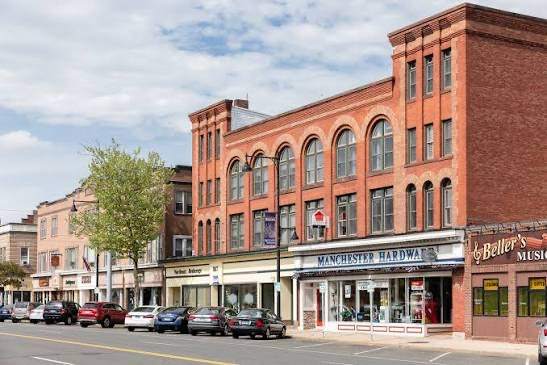
Covering Manchester
Roofing work in Manchester, CT
Manchester is a short drive from Hartford, and the crews, the materials, and the fixed-price quote are the same ones Hartford gets. Storm damage and active leaks take priority over scheduled work; replacements and inspections get booked around what's already on the schedule.
What the roofs are like in Manchester
Manchester has about 59,473 residents, one of the larger populations among the towns ringing Hartford, with a median household income near $87,213, and a median home built around 1963 — roughly 55 percent of housing here is owner-occupied, meaning close to half is rental, and that combination of scale and rental share shows up directly in the building stock: more multi-family and multi-unit buildings than a smaller, more uniformly single-family town would have, alongside the detached houses.
Scale changes the roofing conversation in ways that go beyond simple square footage. A town with more multi-unit buildings has more shared roofs, more roofs serving several households or businesses at once, and more situations where a single roof decision affects more than one party's budget or comfort. None of this makes a single-family home in Manchester any less common than in a neighboring town — it just means the roofing questions that come up alongside the familiar single-family ones are more varied than they would be somewhere without the same multi-family and rental share. Both kinds of building sit within the same town limits, often on the same street.Multi-family roofs and the heat they hold onto
A multi-unit building from the early 1960s more often carries a low-slope or metal roof section than a single-family home from the same era does, particularly on garden-apartment-style construction where a shallow roof over multiple units was a practical, economical choice at the time of construction. Metal roofing in that application performs well structurally for decades, but it has one well-known drawback: it conducts heat efficiently in both directions, absorbing solar heat in summer and losing interior heat quickly in winter, in a way that a shingled roof with more inherent insulating mass simply does not.
A metal roof thermal barrier coating addresses that specific weakness directly, reducing how much solar heat the roof surface transfers into the units below during summer and helping retain conditioned air more effectively year-round. For a multi-family building where heating and cooling costs affect either an owner's operating margin or a tenant's monthly bill, that difference is not a cosmetic upgrade — it changes the building's actual energy performance in a way that shows up on a utility bill within the first full season after it's applied.
The calculation is different for an owner managing several units under one roof than it is for a single-family homeowner making the same kind of decision. A coating applied once covers the whole building's roof at once, rather than being decided unit by unit, which means the return on the investment is spread across however many units that roof actually serves — a more favorable ratio than the same coating applied to a single detached home would produce on its own.
Not every metal roof section in town needs a thermal coating immediately, and the decision usually comes down to how the building is actually being used underneath that section. A metal roof over unconditioned storage or a garage doesn't carry the same urgency as one over occupied, heated or cooled living space, where the heat transfer directly affects a resident's comfort and a utility bill every single month it goes unaddressed. Identifying which category applies to a specific roof section is the first real step, before any coating gets scheduled.
Application itself matters as much as the decision to do it. A thermal barrier coating has to be applied to a clean, properly prepared metal surface to bond and perform as intended — rust, chalking paint, or existing coating failure all compromise adhesion if they're not addressed first, which means a rushed application over a poorly prepared surface can fail well before its expected service life is up, undermining the whole point of the investment.
Cost comparisons often favor coating over replacement for a building owner working within an operating budget rather than a one-time personal expense. Recoating an existing, structurally sound metal roof extends its performance without the cost and disruption of tearing off and replacing the whole system, which matters more on a large multi-unit roof surface than it would on a single garage roof, simply because the total area involved scales with the size of the building.
Longevity claims for these coatings vary by product and application, which is exactly why a specific system's warranty terms and manufacturer specifications matter more than a general sense that "coatings last a long time." Getting that detail right up front, in writing, before a coating is applied, avoids a mismatch later between what a building owner expected and what the specific product actually guarantees.
None of that changes the basic economics for the smaller number of metal roof sections over single-family garages or additions scattered through town — those still get evaluated one building at a time, on their own.
A town this size needs more than one kind of roof service
Manchester's mix of housing — single-family homes, two- and three-family conversions, larger multi-unit buildings — means no single service category covers the whole town. Residential roofing services spans that range deliberately: a straightforward shingle replacement on a single-family home built around 1963 is a different job than a coordinated reroof on a multi-unit building with several owners or a single landlord managing the whole structure, and both fall under the same general category even though the scope, materials, and scheduling look nothing alike.
That range also means the same basic question — repair, coat, or replace — gets answered differently depending on the building type. A single-family owner-occupant is more likely to weigh long-term value against a decision they'll personally live with; a multi-family owner is weighing the same roof against rent income, operating costs, and the practical difficulty of coordinating any exterior work around occupied units. Neither approach is better than the other. They are simply different inputs to the same underlying decision about a roof's condition and remaining service life.
Coordination is the piece that most differentiates a multi-unit project from a single-family one. A single-family reroof affects one household's schedule; a reroof on an occupied multi-unit building means sequencing work to minimize disruption to residents who are living there throughout the project, managing noise and access across shared common areas, and often working around a building's own operating hours or lease terms in ways that never come up on a detached home. None of that changes the underlying roofing work itself, but it changes how that work actually gets planned and executed on the ground.
Financing and approval processes add another layer specific to multi-unit and shared-ownership buildings. A single-family homeowner can typically decide and schedule roof work on their own timeline; a multi-unit building with several owners, a condo association, or a landlord answering to outside financing may need approval from a board, a lender, or another stakeholder before work can even be scheduled, which changes the practical timeline for getting a needed repair or replacement underway even after the roofing decision itself has already been made.
None of this means a homeowner should expect a slower or more complicated process for a straightforward single-family job. The added coordination applies specifically to shared and multi-owner buildings — a detached single-family reroof in Manchester proceeds the same way it would in any town on this list.
Diagnosing a leak on a roof that serves more than one household
A leak on a shared multi-family roof is harder to trace than a leak on a single-family home, for a simple structural reason: water entering at one point on a large, continuous roof surface can travel a meaningful distance before it shows up as a stain inside a specific unit, and the unit where the stain appears is not reliably the unit closest to the actual entry point. A roof leak detection on a building like this has to account for that travel distance across a much larger, more complex roof surface than a typical single-family diagnosis does.
Multiple roof penetrations compound the difficulty. A multi-unit building accumulates more vents, more roof-mounted equipment, and more flashing details than a single-family home simply because it has more mechanical systems serving more living spaces under one roof, and each one is a potential entry point that has to be checked and ruled out individually rather than assumed innocent because it's not near the reported stain.
Getting that diagnosis right matters more here than the inconvenience of one homeowner's ceiling stain would suggest. A leak affecting a shared roof is, by definition, a shared building problem, even when only one unit has noticed it so far — the water finding its way in at any point on that roof surface is a structural issue for the whole building, not a private matter for whichever tenant happened to be under the entry point when it started showing.
Documentation matters more on a shared building too, for a reason that has nothing to do with the roof's physical condition. A property with several units and possibly several owners or a managing landlord benefits from a clear, dated account of what was found and where, since that record may need to be shared among more than one interested party — something a single-family homeowner deciding entirely on their own rarely has to think about in the same way.
Sequencing the check itself also differs on a larger, shared roof. Rather than assuming the closest visible entry point explains a reported stain, a thorough diagnosis on a multi-unit roof typically works section by section across the full surface, checking every penetration and flashing detail methodically rather than stopping at the first plausible-looking issue near the affected unit. That more exhaustive approach takes longer than a single-family diagnosis, but it's the only way to be confident the actual source has been found rather than just a source.
That thoroughness is what turns a single reported stain into an accurate picture of the whole roof's condition, rather than a quick fix aimed at whatever looked most obviously wrong on the first pass.
Hours
Mon–Sat 7am–6pm
Calls are answered Mon–Sat 7am–6pm. Arrival windows are agreed on the call, and storm damage gets priority.
Call (860) 421-6068What we handle
Roofing services we bring to Manchester
-
Full new-roof installation on additions, new builds and full tear-offs.
See details → -
Complete removal and replacement of a worn or storm-damaged roof, from deck inspection through final cleanup.
See details → -
Section or full-roof shingle replacement matched to existing coursing so the repair doesn't stand out from the street.
See details → -
Replacing rotted or delaminated plywood decking discovered during a tear-off, before new shingles or underlayment go down.
See details → -
Reframing a low-slope or flat section to a working pitch so water sheds instead of pooling and leaking.
See details → -
Sistering rafters and reinforcing framing that has sagged under snow load or years of undersized original construction.
See details →
Where we go
Hartford and the surrounding towns
Hartford is the base; these are the neighboring communities our crews cover.
- West Hartford, CT
- East Hartford, CT
- Wethersfield, CT
- Newington, CT
- Bloomfield, CT
- Windsor, CT
- South Windsor, CT
- Rocky Hill, CT
- Manchester, CT
- New Britain, CT
- Glastonbury, CT
- Farmington, CT
- Avon, CT
- Simsbury, CT
- Berlin, CT
- Bristol, CT
Hiring in one of these towns?
A separate guide for each town on what to check before you sign with any roofing contractor there — license and insurance, written scope, and what the warranty actually covers.
Request a quote
Not an emergency? Send the details.
For anything urgent, calling is faster — the phone is answered Mon–Sat 7am–6pm. Use this for scheduled work: inspections, estimates, or a replacement you want priced.