EPDM rubber roofing installation: a bonded seam, not a welded one
What the job involves
EPDM Rubber Roofing Installation in Hartford, CT
What thermoset means for seams
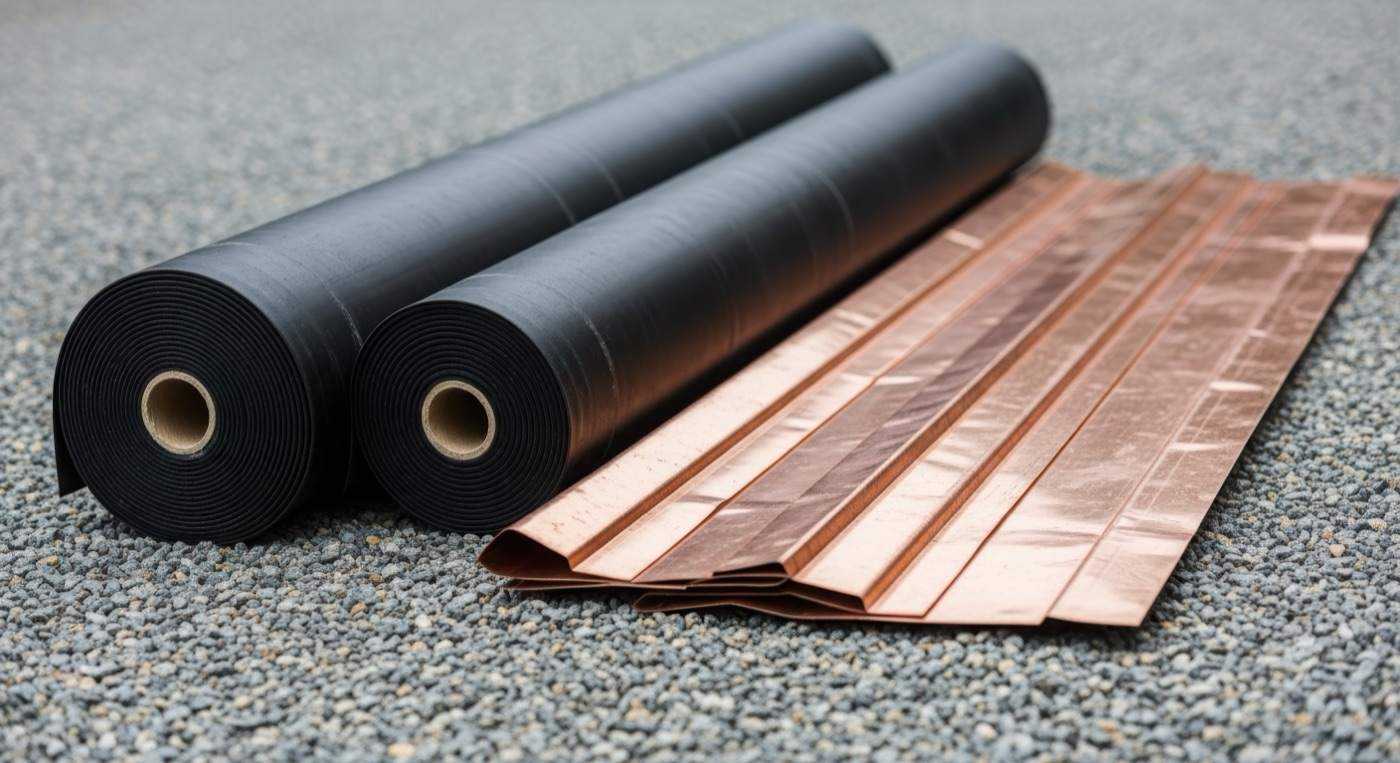
EPDM is a thermoset material, which means it's chemically cured during manufacturing into its final form and stays that way permanently — heat won't soften it back into a workable state the way it would a thermoplastic. That single chemistry fact decides how every seam on an EPDM roof gets made. EPDM is a thermoset membrane, so its seams must be bonded with adhesive or seam tape, while TPO and PVC are thermoplastics whose seams are heat-welded instead — there's no torch or hot-air welder involved in an EPDM seam at all, because the material simply doesn't respond to heat the way a weldable membrane does.
That makes seam preparation the single most consequential step in an EPDM installation. A welded thermoplastic seam, correctly made, fuses into something as strong as the membrane field itself — an adhered EPDM seam never quite becomes one continuous sheet the way a weld does. It's a glue joint, and like any glue joint its strength depends entirely on how well the two surfaces were cleaned, primed and pressed together before the adhesive or tape ever went down. A seam rolled without enough pressure, or bonded over a surface that wasn't fully clean and dry, is a weak point built into the roof on day one, even though it can look identical to a properly made seam for years before it starts to show.
How the membrane itself is held to the deck is a separate decision from how its seams are joined, and EPDM can be installed a few different ways. A fully adhered system glues the whole sheet directly to the substrate below it, which limits how much the membrane can move independently of the deck. A mechanically fastened system instead secures the membrane at intervals with fasteners and plates, leaving most of the sheet free rather than bonded down everywhere. Loose-laid, ballasted systems skip most fastening and adhesive entirely, holding the membrane in place with a layer of stone or pavers instead. Each approach changes how the roof handles wind uplift and how a future repair gets accessed, which is a separate conversation from the seam question but one that belongs in the same installation decision.
Our TPO roofing installation page covers the thermoplastic alternative in more depth, since the seam story is really the central difference between the two membrane types — everything else about how they perform on a roof follows from that one distinction in how the material responds to heat.
EPDM's fit on a residential roof
EPDM and TPO are both classified as single-ply roofing membranes — large sheets of synthetic rubber or thermoplastic material rolled out and seamed at low-slope or flat sections, rather than overlapping courses the way shingles do. That makes EPDM a fit for the parts of a house that a pitched shingle or metal roof was never designed to cover: a porch roof, a rear addition, a garage with a shallow slope, or a dormer roof too flat to shed water the way the steeper roof around it does.
EPDM's flexibility is part of what makes it suit those sections well. The membrane conforms to irregular shapes and roof penetrations more easily than a rigid material would, and it comes in wide sheets that minimize the number of seams a given roof section actually needs — fewer seams means fewer of the bonded joints that are the system's real point of vulnerability. EPDM is also typically installed in black, which absorbs more solar heat than a lighter membrane color would; on a small, shaded, or otherwise low-visibility roof section that's rarely a meaningful downside, though it's a real factor worth weighing on a larger or more exposed low-slope area.
None of this happens in isolation from the rest of the roof assembly underneath the membrane — insulation board, cover board, and the deck itself all play a role in how the finished system performs, not just the membrane on top. Our flat roof installation page covers that fuller assembly, since EPDM is really one component of a larger system rather than a standalone roof in its own right.
Detailing at penetrations
Field seams between sheets of membrane get most of the attention in any discussion of EPDM, but penetrations are where a lot of real-world failures actually start. Every vent stack, drain, corner, and wall termination on an EPDM roof is its own bonded detail — a pipe boot sealed around a stack, a corner patch fitted into an inside or outside turn, a termination bar holding the membrane's edge against a wall. Each of those is another adhesive bond, made by hand, at a spot on the roof where water naturally collects or where the membrane has to change direction.
EPDM can't be re-welded the way a thermoplastic membrane can, which is exactly where the repair story comes back into play: a patch on an aging EPDM roof is bonded in the same adhesive-and-tape method the original installation used — which means a repair is only as good as how well the old rubber surface gets prepared before the patch goes on. EPDM that's been exposed to sun and weather for years often develops a chalky surface film that has to be cleaned off completely before a new patch will bond to it; skip that step and a patch can look sealed on the day it's installed while never actually achieving a durable bond to the aged membrane underneath.
That's the practical difference thermoset chemistry makes over the life of the roof, not just on installation day: every future repair is still a bonding job, done by hand, at whatever detail is failing — which is exactly why the quality of that original seam and detail work matters as much years later as it did the day the roof went on.
That's also the case for checking the roof on a regular basis rather than waiting for a leak to show up inside the house below it. Seams and penetration details don't fail all at once — an edge of tape starting to lift, a termination bar working slightly loose, a pipe boot beginning to shrink and crack with age are all early signs on a membrane roof, visible from the roof surface itself well before any of them lets water through. Catching that kind of wear on a walk-through, before it becomes an active leak, keeps a repair a small adhesive job instead of letting water sit against the deck underneath a failed detail for a season or more before anyone notices.
Hours
Mon–Sat 7am–6pm
Calls are answered Mon–Sat 7am–6pm. Arrival windows are agreed on the call, and storm damage gets priority.
Call (860) 421-6068Part of our residential roofing services work — related: asphalt shingle roof installation, cedar shake roof installation.
Through the year
How Hartford weather changes this job
Winter in Hartford
Ice dams build along the eaves when attic heat melts snow that then refreezes at the colder edge, backing water up under the shingles. Sustained snow load also stresses older framing and flat sections built with a lighter deck.
Spring in Hartford
Freeze-thaw cycling through late winter works ice into small cracks in flashing and sealant, so the first heavy spring rain is usually when a slow leak turns visible. Wind during spring storms lifts shingles that ice already loosened.
Summer in Hartford
UV exposure and heat cycling dry out asphalt shingles faster on south- and west-facing slopes. A roof that looked fine in June can show granule loss and curling edges by August.
Autumn in Hartford
The season for getting ahead of winter — gutters cleared, flashing checked, and a full inspection scheduled before the first hard freeze locks in whatever damage went unnoticed over summer.
What we handle
Roofing services in Hartford
-
Full new-roof installation on additions, new builds and full tear-offs.
See details → -
Complete removal and replacement of a worn or storm-damaged roof, from deck inspection through final cleanup.
See details → -
Section or full-roof shingle replacement matched to existing coursing so the repair doesn't stand out from the street.
See details → -
Replacing rotted or delaminated plywood decking discovered during a tear-off, before new shingles or underlayment go down.
See details → -
Reframing a low-slope or flat section to a working pitch so water sheds instead of pooling and leaking.
See details → -
Sistering rafters and reinforcing framing that has sagged under snow load or years of undersized original construction.
See details → -
Repairing or reinforcing damaged trusses so the roof carries its rated load through the next big snowfall.
See details → -
Roof preparation that carries a solar array's weight and penetrations without voiding either the roofing or panel warranty.
See details → -
Residential roofing service covering material selection, installation and long-term care for every roof type Hartford homes use.
See details → -
Standard three-tab or architectural asphalt shingle installation, the most common re-roof for Hartford's postwar capes and colonials.
See details → -
Hand-split or taper-sawn cedar shake installation for owners restoring or preserving a period roofline.
See details → -
New natural slate installation on colonials and capes where the original roof has finally reached end of life.
See details → -
Repair and selective replacement for Hartford's original slate roofs, matched to the existing stone.
See details → -
Standing-seam or exposed-fastener metal roofing installation, sized for New England snow load and long-term durability.
See details → -
Concrete or clay tile roof installation for owners who want a distinct roofline and decades of service life.
See details → -
TPO single-ply membrane installation for flat commercial and residential additions, reflective and seam-welded for a tight roof.
See details → -
Reflective shingles, ridge ventilation and insulation upgrades chosen to cut attic heat loss through a Connecticut winter.
See details → -
Diagnosis and repair for leaks, flashing failures and storm-damaged sections before small problems become full replacements.
See details → -
Locating an active leak's true entry point, which is often feet away from the stain on the ceiling.
See details → -
Every failure point contributing to a leak identified through a full roof assessment before any repair is scoped.
See details → -
Flashing and sealant work at known failure points so this winter's freeze-thaw cycle doesn't reopen last year's leak.
See details → -
Sealing seams, penetrations and transitions with roofing-grade sealant to stop water intrusion at a specific point.
See details → -
Rebuilding step and counter flashing around a chimney, the single most common source of a roof leak.
See details → -
Chimney crown cracks patched and sealed before water gets behind the flashing and into the attic.
See details → -
Installing flashing at valleys, walls and penetrations, the metal detailing that keeps water moving off the roof.
See details → -
Drip edge fitted along eaves and rakes so runoff clears the fascia instead of rotting it from behind.
See details → -
Eave flashing rebuilt where ice dams do the most damage on older Hartford roof lines.
See details → -
Resealing or replacing failed skylight flashing and glazing seals that let water track down into a ceiling.
See details → -
Cutting in and flashing a new skylight, curb-mounted or deck-mounted, without compromising the surrounding roof deck.
See details → -
Removing and resetting solar panels to repair the roofing underneath, then re-flashing every mounting point.
See details → -
Storm, hail and wind damage — stabilizing the roof first, then scoping the permanent repair.
See details → -
Repairing roof damage from a specific storm event, documented and itemized for an insurance claim.
See details → -
Replacing hail-bruised or fractured shingles identified during a post-storm inspection, matched to the existing roof.
See details → -
Resetting or replacing shingles lifted or torn loose by high wind before the next storm gets underneath them.
See details → -
Post-wind-event inspection finding lifted shingles and compromised seals before they turn into an active leak.
See details → -
Roof condition documented after a storm and written up for an insurance adjuster before repairs begin.
See details → -
Steam removal of active dams plus the ventilation and shield work that stops the next one.
See details → -
Raking or shoveling heavy snow load off a roof before it exceeds the structure's rated capacity.
See details → -
Scheduled inspection, ventilation and drainage work that catches freeze-thaw damage before winter turns it into a leak.
See details → -
Every visible roof system checked, covering shingles, flashing, ventilation and decking, with photos and a written condition report.
See details → -
Ridge and soffit ventilation added so attic air moves the way it needs to in every season.
See details → -
Repairing blocked or undersized attic ventilation that is driving ice dams or premature shingle wear.
See details → -
Adding attic insulation to the level needed to keep the roof deck cold and stop ice dams.
See details → -
Installing a moisture barrier under roofing materials to block vapor intrusion before it reaches the decking.
See details → -
Self-adhering ice-and-water shield goes down at eaves and valleys, the underlayment that actually stops an ice dam leak.
See details → -
Installing or re-routing roof drainage so runoff clears the foundation instead of pooling against the house.
See details → -
New or replacement gutters and downspouts sized to actually carry Hartford's spring runoff away from the foundation.
See details → -
Periodic inspection of a tile roof for cracked or slipped tiles and failing underlayment.
See details → -
Flat and low-slope roofing for Hartford-area commercial buildings, from new membrane installs to restoration and waterproofing.
See details → -
A commercial building gets a new flat roof, membrane selected for the building's use and traffic.
See details → -
Patching or resealing a failed section of flat roof membrane before ponding water finds its way inside.
See details → -
Full tear-off and replacement of an aged flat roof membrane that has outlived its service life.
See details → -
Membrane waterproofing for low-slope sections that don't shed water fast enough for standard shingle roofing to work.
See details → -
Waterproofing a commercial flat roof at seams, penetrations and parapet walls where leaks actually start.
See details → -
Applying an elastomeric, silicone or acrylic roof coating to extend the life of an existing commercial membrane.
See details → -
A reflective thermal barrier coating applied to a metal roof to cut cooling load and slow corrosion.
See details → -
Restoring an aging commercial roof system to extend its service life without a full tear-off and replacement.
See details → -
Infrared scanning of a commercial roof to locate trapped moisture under the membrane before it spreads.
See details →
Where we go
Hartford and the surrounding towns
Hartford is the base; these are the neighboring communities our crews cover.
- West Hartford, CT
- East Hartford, CT
- Wethersfield, CT
- Newington, CT
- Bloomfield, CT
- Windsor, CT
- South Windsor, CT
- Rocky Hill, CT
- Manchester, CT
- New Britain, CT
- Glastonbury, CT
- Farmington, CT
- Avon, CT
- Simsbury, CT
- Berlin, CT
- Bristol, CT
Hiring in one of these towns?
A separate guide for each town on what to check before you sign with any roofing contractor there — license and insurance, written scope, and what the warranty actually covers.
Straight answers
Common questions about roofing costs and service
How much does Home Depot charge for gutter installation?
We don't track big-box retail installation pricing, so we can't speak to what a retailer charges for that service. What we can say is that gutter pricing generally comes down to linear footage, corner and downspout count, and material choice, regardless of who's doing the installing — those are the specifics worth comparing across any quote rather than a single headline number.
How many years will a slate roof last?
We don't have a verified figure we'd put a specific number on, and we'd be cautious of anyone who states one with more confidence than the material actually supports — slate's service life depends heavily on the specific stone, how it was installed, and the flashing tying it together. What tends to happen in practice is that the copper flashing at chimneys and valleys reaches the end of its life well before the slate field does, since flashing typically fails at its soldered joints rather than the slate wearing out. A slate roof's real limiting factor is usually that flashing, not the slate itself.
What is the highest rated home insulation?
There isn't a single material that ranks highest across every measure that matters, which is part of why we'd be skeptical of a simple answer to that question. Insulation gets compared on R-value per inch, how well it handles air movement and moisture, and how well it performs in the specific space it's going into, and different materials trade off differently across those categories. A product that scores well on R-value per inch in a lab test can still underperform in a real attic if it's not paired with proper air sealing underneath it.
How much should replacing guttering cost?
Linear footage, corner and downspout count, and material choice are what actually move that number, more than any flat average could capture. It's worth noting that a low-slope roof section covered in EPDM or TPO often drains through internal drains or scuppers rather than a conventional gutter run along the edge, so what looks like a gutter question on a flat-roofed addition can sometimes really be a roof drainage question instead. We'd look at how the specific roof actually sheds water before pricing gutter work on it.
Request a quote
Not an emergency? Send the details.
For anything urgent, calling is faster — the phone is answered Mon–Sat 7am–6pm. Use this for scheduled work: inspections, estimates, or a replacement you want priced.